

Frequently Asked Questions-
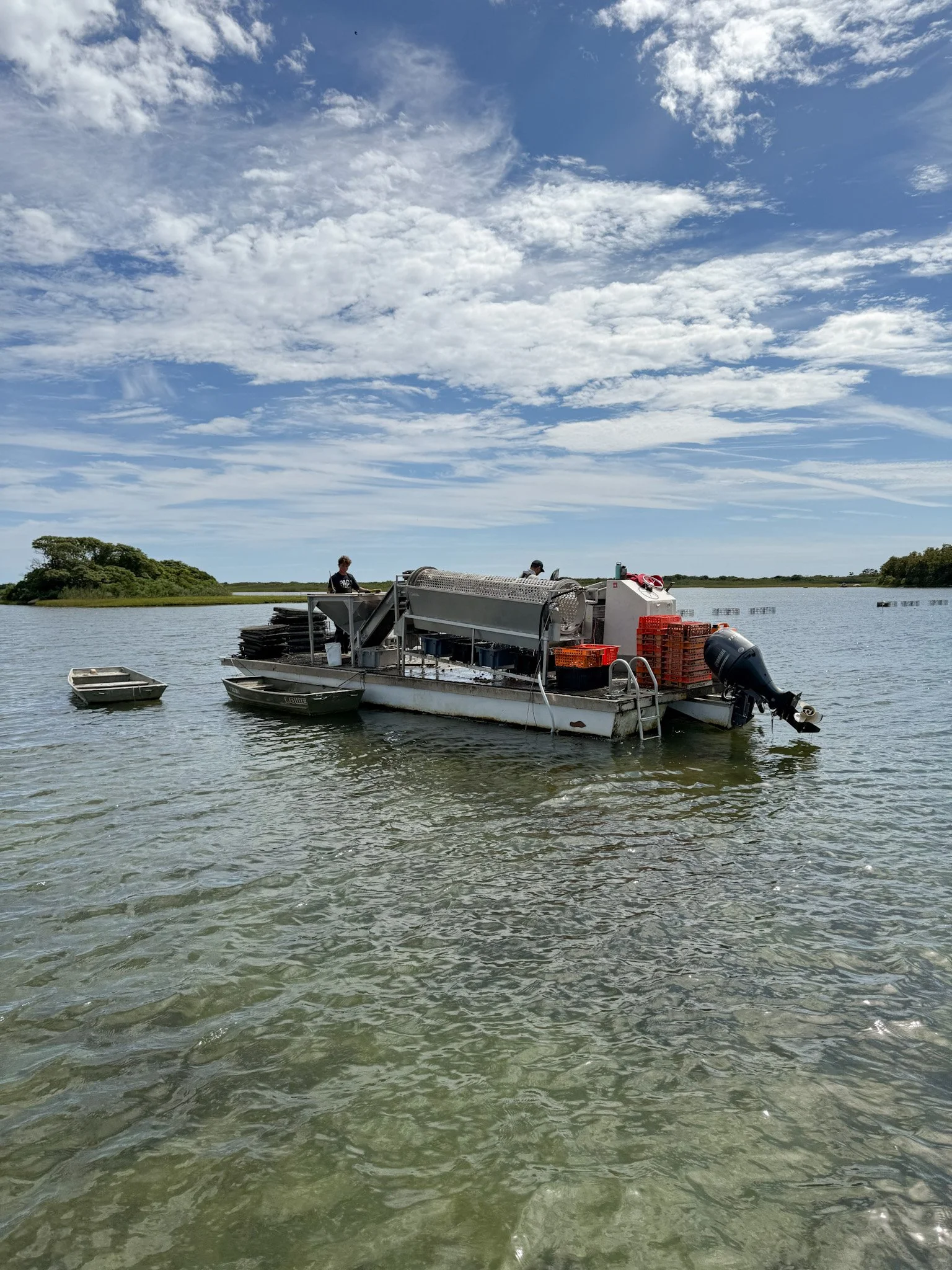
Our 9-acre oyster farm is located in Ninigret Pond and can be seen directly across from the kayak launch in Ninigret Park. We don't currently have a brick-and-mortar location to visit, although we hope to in the future!
-
Sorry, we are not currently shipping our oysters. If you're local to Charlestown, RI, send us a message and we'll do our best to coordinate a pickup so you can enjoy them at home.
-
Our Breachway Oysters can be found in restaurants across Rhode Island, including Newport, Westerly, South Kingstown, Narragansett, and East Greenwich, as well as in raw bars along the East Coast in Washington, DC, Charleston, and Massachusetts.
-
Absolutely! You can find all the details and inquire about your event here.
-
We currently offer oysters, cocktail shrimp, littleneck clams, and caviar for raw bar catering. We plan to expand our menu to include small, seafood-focused bites in the near future.
-
Our Breachway Oysters are briny with a sweet finish, a deep cup, and plump meat. They're a small to medium-sized oyster, as we sell most of them at around 2 inches.
-
Our farm sits closest to the Charlestown Breachway, the channel that connects Ninigret Pond to the ocean. That location means our oysters benefit from more water movement than other farms in the pond, bringing in extra nutrients and a steady exchange of salt water. Ninigret Pond is a salt pond, so the water is a mix of salt water from the ocean and fresh water from the pond.
-
Most of our oysters grow on the farm for about 18 months to 2 years before they're ready for harvest. Growth depends on water temperature, food supply, and the time of year the seed goes in the water.
-
Yes! We encourage eating oysters year-round. Depending on the season, they may taste a little different. Oysters tend to be at their sweetest in late fall and early winter, when they've built up glycogen (a natural sugar) to fuel them through their dormant cold-weather months. In late summer and early fall, they tend to be especially plump because there's an abundance of food in the water. The old wives' tale about only eating oysters in months that end in R dates back to before modern refrigeration, and isn't something to worry about today.
-
Store them in your refrigerator covered with a damp towel (keep them towards the back if possible to protect them from warm air coming in from opening the door). Don't store them in a sealed bag or submerge them in fresh water. Stored properly, they will stay fresh for a week, but we always recommend eating them within a few days of purchasing them for the best quality. And only shuck them when you are ready to serve and eat them!